The Alchemist Experience
Caviar and Worms with Sodium Alginate
Caviar and Worms with Sodium Alginate
Couldn't load pickup availability
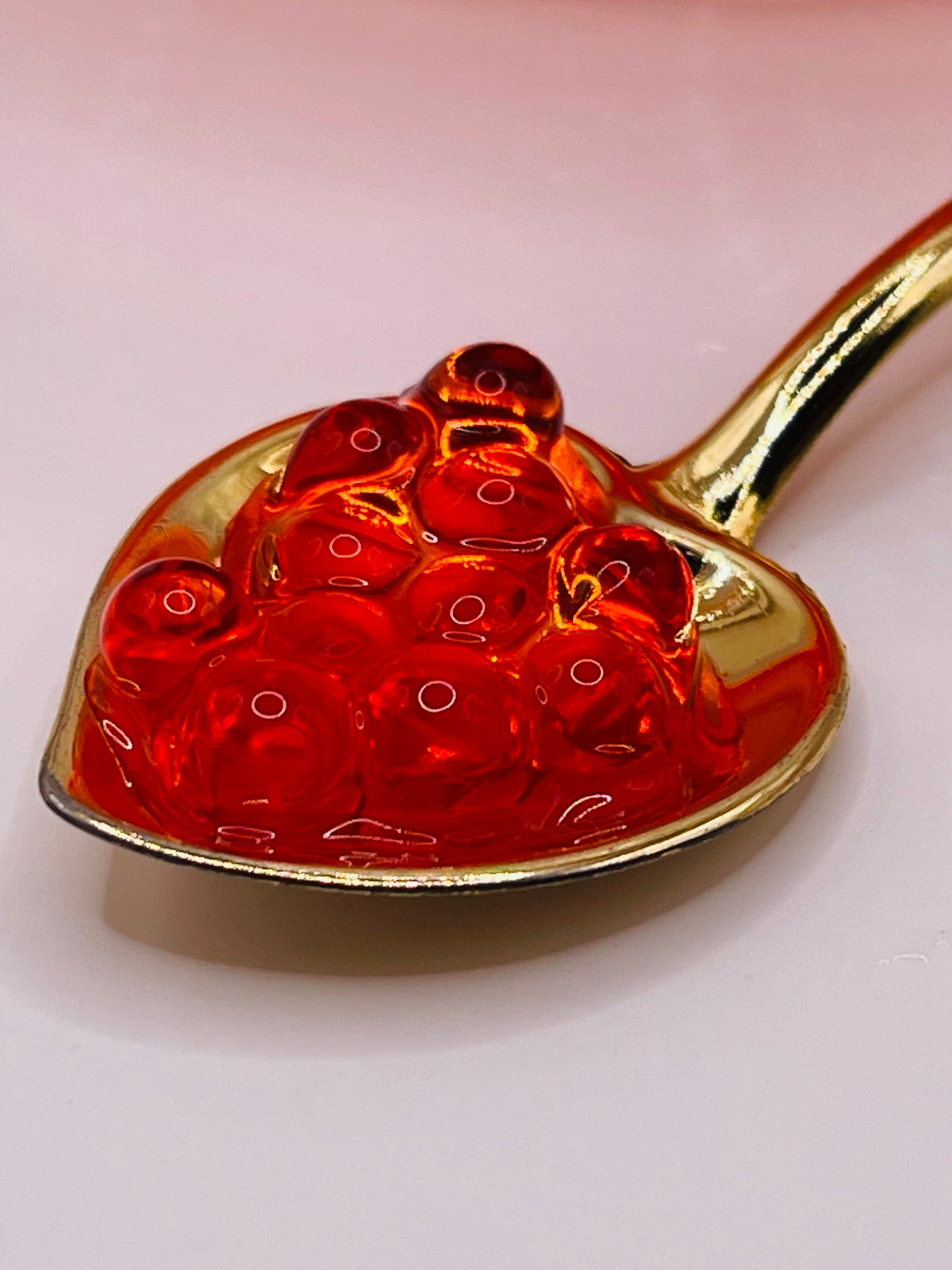
Drop a bead of seaweed-derived sodium alginate solution into a calcium chloride bath and watch a liquid-filled "caviar" gel sphere form before your eyes — a membrane building itself in real time through polymer cross-linking chemistry. This experiment explores ionotropic gelation, the same process behind molecular gastronomy caviar, pharmaceutical drug capsules, wound dressings, and cutting-edge cell encapsulation for organ replacement research. Students make basic spheres, extrude gel worms and spirals, run reverse spherification to produce a thicker more durable shell, and systematically vary alginate concentration to compare membrane thickness and elasticity. Every trial is genuinely photogenic and every result is explainable at the molecular level. This is hands-on biomaterials science that connects food science, medicine, and polymer chemistry in a single beautiful experiment.
What's Included
- Sodium alginate 3g — the polymer backbone; extracted from brown seaweed
- Calcium chloride 10g — the ionic cross-linker; triggers instant gelation on contact
- Sodium citrate 1g — sequestrant; prevents premature cross-linking before use
- Plastic syringe 10mL — for controlled dropping and noodle extrusion
- Nitrile gloves × 2 pairs
- Safety goggles × 2 pairs
- Printed worksheet
You Provide
- Shallow Bowl
- Slotted Spoon
- Kitchen Scale
- Distilled Water
- Food Coloring
- Juice (if desired)
♻ Waste Disposal
Curriculum Connections
- NGSS HS-PS2-6 / MS-PS1-3 Molecular structure determines material properties
- NGSS HS-ETS1-2 / HS-ETS1-3 Engineering design through formulation optimization
- AP Chemistry Units 3 & 4 Ionic bonding, IMF, diffusion-controlled reactions
- IB Chemistry Topic 4 / Option B Ionic cross-linking, polysaccharide structure
- CCSS Science Practices SP3 & SP6 Systematic variable investigation, mechanistic explanation
Share